


Religious Education
The Religious Education Department
In a Catholic school, Religious Education is the core of the core curriculum. It lies at the heart of our mission and reflects the very reason why our school was built in the first place: to educate and form young people within the Catholic faith. Religious Education is therefore always more than an academic subject and never less than one. It is both religious and educational. It is religious because it binds the whole curriculum together and, through the study of the Catholic faith, provides opportunities for the formation and development of faith. It enables our students to encounter the richness of the Catholic tradition and to consider how faith shapes our understanding of ourselves, others and the world. It is educational because it is a subject of academic rigour and critical enquiry. Students are challenged to think deeply, ask meaningful questions and understand the viewpoints of others through dialogue and critical engagement.
Here at Bishop Douglass, we want our students to know more and remember more, becoming religiously literate and consciously engaged young people. We want them to develop the knowledge, understanding and skills – appropriate to their age and capacity – to reflect spiritually, think ethically and theologically, and recognise the demands of religious commitment in everyday life. Ultimately, our vision is for Religious Education to remain at the heart of Bishop Douglass: the core of the core curriculum, central to our Catholic identity and to the purpose for which our school was founded.
RE through the Key Stages
Religious Education at Bishop Douglass is a journey that develops throughout a student’s time at our school. From Key Stage 3 through to Key Stage 5, students build upon their knowledge and understanding of the Catholic faith while engaging with Scripture, theology, philosophy, ethics and the beliefs of other religious traditions.
Our curriculum is carefully sequenced to ensure that students continually revisit and deepen their understanding. As they move through the key stages, they are challenged to think more deeply, ask meaningful questions and make connections between religious belief, teaching and lived experience.
Through this journey, we aim to develop students who are religiously literate, intellectually curious and consciously engaged. Students are supported to know more, remember more and understand more, while developing the confidence to reflect spiritually, think ethically and engage respectfully with different perspectives.
RE therefore remains at the heart of our curriculum from Year 7 through to Year 13, supporting our students not only in their academic development but also in their formation as young people within our Catholic community.
Key Stage 3
Our Religious Education curriculum follows the spiral curriculum model set out within the Religious Education Directory (RED), To Know You More Clearly. This means that pupils revisit core theological concepts and areas of knowledge throughout their Religious Education, with each encounter building upon prior learning and developing greater depth, complexity and understanding.
The curriculum is structured around the recurring branches of the RED, including Creation and Covenant, Prophecy and Promise, Galilee to Jerusalem, Desert to Garden, To the Ends of the Earth, and Dialogue and Encounter. These provide a coherent structure through which pupils encounter and revisit the central beliefs, teachings and traditions of the Catholic faith.
As pupils progress, learning moves beyond simple repetition. Prior knowledge provides the foundation for increasingly sophisticated theological thinking. Pupils encounter more complex scripture and sources of authority, deepen their understanding of key concepts, develop their religious vocabulary and make increasingly meaningful connections between belief, teaching and practice.
This spiral approach enables pupils to connect new learning to what they already know, while regular retrieval and revisiting help to strengthen long-term retention. Ultimately, the curriculum is sequenced so that pupils know more, remember more and understand more, becoming increasingly confident and religiously literate as they progress through the school.
Key Stage 4
At Key Stage 4, students follow the GCSE Religious Studies A course. The course provides students with the opportunity to develop their knowledge and understanding of religious beliefs, teachings and practices, while exploring a range of philosophical, ethical and contemporary issues.
Students will sit three examination papers at the end of Year 11. Each paper covers different areas of study and contributes to the overall GCSE qualification.
Paper 1 – Catholic Christianity
Length: 1 hour 45 minutes
Paper 1 focuses on Catholic Christianity and is made up of four components:
- Catholic Beliefs
- Catholic Practices
- Catholic Sources of Wisdom and Authority
- Catholic Forms of Expression and Ways of Life
Paper 2 – Judaism
Length: 50 minutes
Worth: 25% of the GCSE
Paper 2 focuses on Judaism and is made up of two components:
- Jewish Beliefs
- Jewish Practices
Paper 3 – Philosophy, Relationships and the Family
Length: 50 minutes
Worth: 25% of the GCSE
Paper 3 explores philosophical and ethical questions, with a particular focus on:
- Philosophy
- Relationships and the Family
Assessment
Students will complete all three papers at the end of Year 11. Across the course, students develop their ability to recall and apply religious knowledge, analyse and evaluate different viewpoints, and respond thoughtfully to philosophical and ethical questions.
The GCSE encourages students to engage with important questions about faith, morality, relationships, society and the world around them, developing critical thinking and respect for different perspectives.
Key Stage 5
Religious Studies is one of the most successful departments at Key Stage 5. Pupils are offered the A level in Theology comprising of 1/3 Philosophy, 1/3 Ethics and 1/3 Christian Theology. All year 12 and 13 pupils are required to attend 1 module a week of Core RE in addition to their options.
Curriculum Map
religious education curriculum map 2026.pdf
Enrichment Opportunities
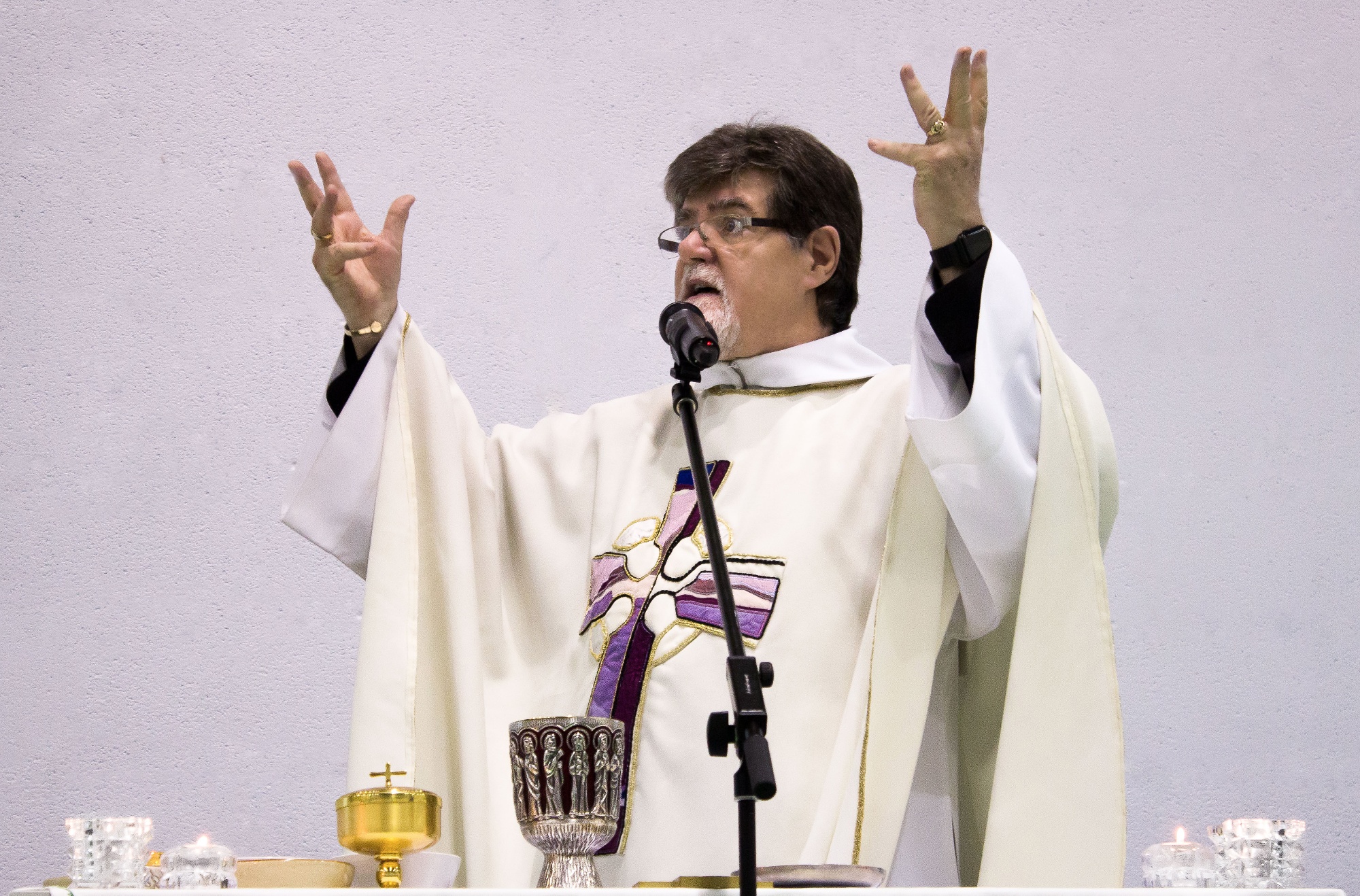
The department gives pupils the opportunity to explore the Catholic faith through involvement in the liturgical life of the school. Whether at retreats, the November memorial services, and celebration of the Sacraments, pupils are constantly encouraged to explore the fundamental principles and subtle nuances of their faith through prayer and participation.
Many of our programmes are led by our liturgical prefect team such as moments for Jesus twice weekly, a weekly Bible club. We have a Raising and Giving committee who helps oversee charity fundraising such as McMillan Coffee Mornings.
Mass is an integral part of our school life and we have mass at key points throughout the year as well as weekly and on holy days of obligation. Stations of the cross and reconciliation are encouraged throughout Lent.
Learning trips and school visits have proved popular and a fantastic means to further pupils' learning and engagement with the subject. Pupils are given the opportunity to visit local places of worship, including the Synagogue and the Hindu temple as well as the Orthodox Church.
Pupils are given the opportunity to go on pilgrimage to Walsingham and the Eternal City, and heart of Catholicism, Rome. Bishop Douglass pupils have enjoyed the experience of a Papal Audience and special blessing from the Pope. Intervention is an integral part of the curriculum and R.E pupils can regularly be found in Saturday Schools and revision classes.
For further information please contact us via email - schooladmin@bishopdouglass.barnet.sch.uk